


Registered Voter Mailing List
The United States is one of the few nations in history that has continuously operated under a democratic system of governance since its founding. Unlike many countries that transitioned to democracy over time, the United States was established with a government based on the principle that its citizens have the right to choose their representatives at every level—local, county, state, and federal. This system ensures that leadership is not imposed upon the people but rather selected by them through a structured electoral process. Whether electing city council members, governors, congressional representatives, or the President of the United States, American citizens have always had a say in determining who will hold these crucial positions.
At the heart of the democratic process is the election, a complex and highly coordinated event that encompasses candidate campaigns, public debates, voter outreach, and the actual casting of ballots. Political campaigns serve a fundamental role in informing and persuading voters, allowing candidates to present their platforms, outline their policy priorities, and engage with the electorate. The election process itself has evolved over time to become more accessible and inclusive. While in the past, voting required individuals to be physically present at designated polling locations during limited hours, today, advancements such as early voting, absentee ballots, and mail-in voting have expanded voter participation. These measures ensure that those with disabilities, work obligations, or other constraints can still exercise their right to vote without unnecessary barriers. In many states, online voter registration and ballot-tracking systems further enhance accessibility and security, ensuring that every vote is counted accurately.
However, democracy is not just about presidential elections that take place every four years. The United States is in a constant cycle of governance, with local and state elections occurring annually and congressional midterms reshaping legislative power every two years. Even in years between major national elections, the political landscape remains highly active, with campaigns gearing up, policy debates unfolding, and voter engagement efforts continuing. This year marks the beginning of yet another national election cycle, where political parties, advocacy groups, and independent candidates mobilize to shape the future leadership of the country. As political movements gain momentum, effective communication with the electorate becomes a top priority.
Sprint Data Solutions Worldwide Marketing has been a key partner for political organizations, campaigns, and advocacy groups, helping to ensure that the mechanisms of democracy function efficiently. With extensive experience in political data, direct mail outreach, digital marketing, and voter engagement strategies, Sprint Data Solutions Worldwide Marketing plays a vital role in connecting campaigns with voters. As the country prepares for another national election, Sprint Data Solutions Worldwide Marketing stands ready to assist candidates, political action committees, and grassroots organizations in their efforts to reach, inform, and mobilize voters, reinforcing the foundation of American democracy.
About Sprint Data Solutions Worldwide Marketing
Sprint Data Solutions Worldwide Marketing is the realization of a vision by a disabled veteran who serves as the founder, owner, and operator of a proudly 100% American-based business. After years of dedicated military service and making personal sacrifices to defend the nation, the decision was made to shift focus from military efforts to fostering economic growth. However, this was not just about personal success—it was about strengthening the economy by empowering businesses to expand their reach, grow their revenues, and create sustainable success. Choosing to establish the company in Las Vegas, Nevada, the founder started with a small, local operation. Yet, through years of delivering high-quality results and exceeding client expectations, Sprint Data Solutions Worldwide Marketing experienced continuous growth. Today, the company boasts a seasoned team with over 50 years of collective expertise in the marketing and promotions industry, dedicated to providing businesses with superior marketing data and strategies.
Sprint Data Solutions Worldwide Marketing initially entered the industry specializing in direct mail marketing, a highly effective strategy long before digital marketing emerged. This foundation in direct mail required the development of extensive database resources, including the collection and management of critical data points such as names, mailing addresses, and key demographic identifiers. These resources allowed clients to execute highly targeted and effective campaigns, increasing their engagement and conversion rates. The company’s commitment to precision and results-driven marketing fueled its expansion beyond its Las Vegas roots. As the demand for its services grew, Sprint Data Solutions Worldwide Marketing expanded its reach to cover the entire continental United States, eventually incorporating Alaska and Hawaii for full national coverage.
Recognizing the growing demand for high-quality marketing data beyond U.S. borders, the company further extended its services into North America, providing comprehensive market access for businesses targeting consumers in Canada and Mexico. However, growth did not stop there. Sprint Data Solutions Worldwide Marketing evolved into an internationally recognized provider of marketing data, enabling clients to expand their reach to global markets, including lucrative European destinations such as France and other regions within the European Union. This global expansion reflects the company’s commitment to staying ahead of industry trends, continuously refining its data collection and targeting capabilities, and ensuring businesses have the most effective resources to maximize their marketing potential. Today, Sprint Data Solutions Worldwide Marketing remains a trusted leader in the industry, offering unparalleled access to consumer and business databases, ensuring that clients can connect with their ideal audiences efficiently and effectively.
Elections Are Different In The New Millennium
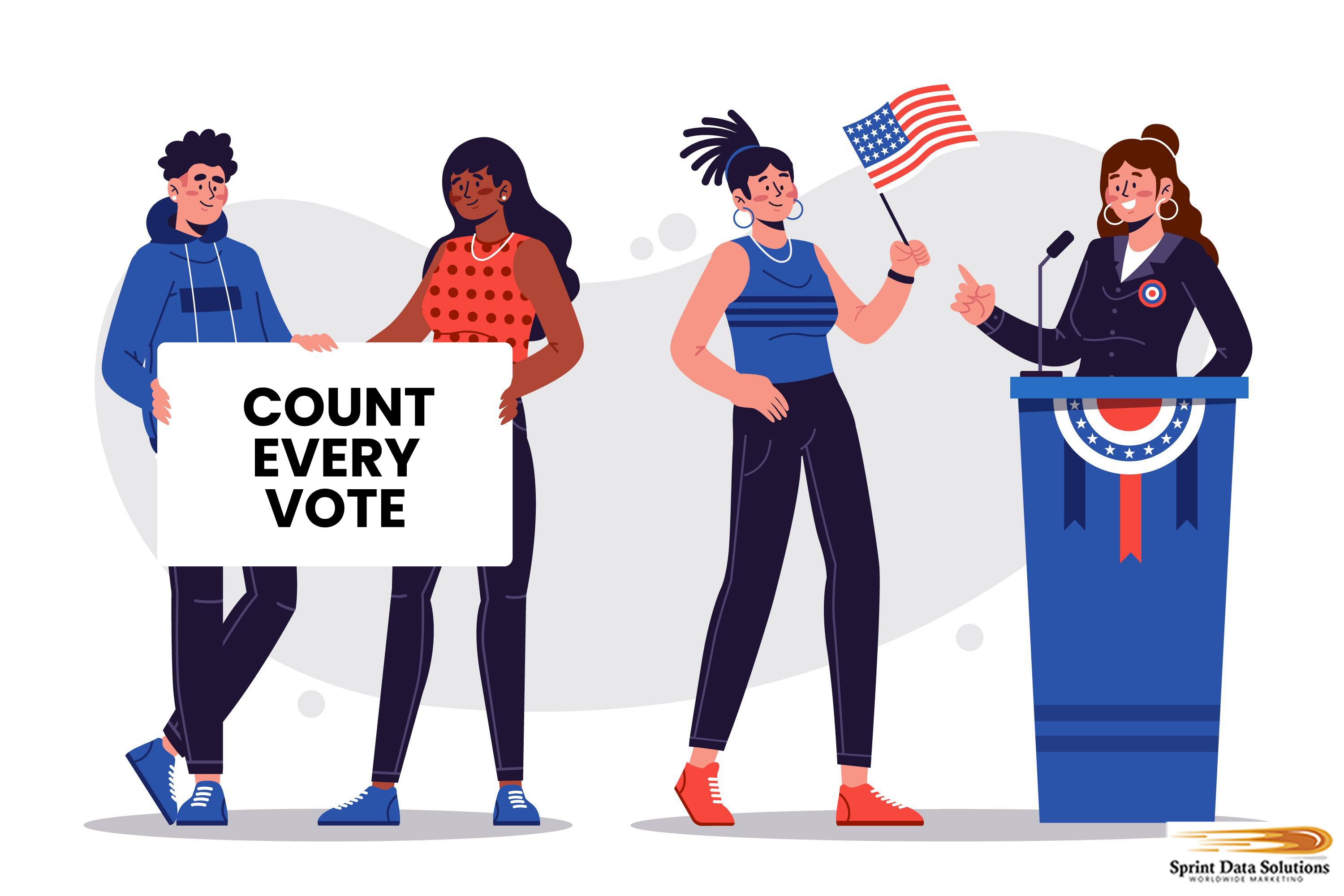
The democratic process, particularly how voters are courted, has undergone a profound transformation over the years, with the rise of the Internet fundamentally reshaping traditional campaigning methods. While the primary objective remains unchanged—persuading voters that a candidate is the best choice for an elected position—the strategies and tools used to achieve this goal have evolved dramatically. Whether at the local, state, or national level, political campaigns must establish a candidate’s legitimacy, both in terms of personal integrity and professional qualifications, while articulating clear policy positions and compelling promises for change should they be elected.
Historically, before the rise of mass communication, political campaigns relied heavily on direct engagement, with candidates traveling extensively to deliver speeches and engage with voters in key election districts. Print materials such as posters, pamphlets, and newspapers played a critical role in spreading political messages. The advent of radio in the early 20th century marked the first major shift in electioneering, allowing candidates to broadcast their messages to a much wider audience without the constraints of physical presence. This era saw the power of the spoken word amplified, with radio addresses becoming a key tool for shaping public perception. Franklin D. Roosevelt’s famous “Fireside Chats” illustrated how radio could be leveraged to establish a direct and personal connection with voters.
Television introduced another seismic shift, making visual presentation a crucial aspect of political campaigns. Suddenly, image and body language played a far greater role, as debates and speeches were now scrutinized not just for content but for appearance, charisma, and demeanor. The first-ever televised presidential debate in 1960 between John F. Kennedy and Richard Nixon demonstrated the impact of television, as Kennedy’s poised and confident appearance contrasted sharply with Nixon’s more haggard and uncomfortable presence. From that moment forward, television advertisements, campaign rallies, and interviews became essential components of political strategy.
However, the rise of the Internet has been the most transformative shift yet, enabling unprecedented levels of precision in voter targeting. Unlike traditional broadcast media, which delivers messages to broad, undifferentiated audiences, digital platforms allow campaigns to tailor messages to specific demographics, psychographics, and even individual behaviors. With extensive data collection from online activities—ranging from social media interactions to website visits and online memberships—campaigns can build highly detailed voter profiles, allowing for microtargeting strategies that would have been unimaginable in previous generations. This data is often shared across platforms and organizations, enhancing the ability to craft personalized messages designed to resonate with specific voter segments.
Another critical evolution brought by the Internet is the on-demand nature of political content consumption. Unlike radio and television, which required audiences to tune in at designated times, digital content can be accessed at any time, anywhere, on any internet-connected device. Whether through social media platforms, video streaming services, or political websites, voters can consume campaign materials at their convenience. This has not only made campaign outreach more efficient but has also shifted the balance of power in media consumption, as candidates and organizations can bypass traditional gatekeepers such as television networks and newspapers to communicate directly with their audience.
Furthermore, the Internet has democratized political participation, allowing grassroots movements to flourish and giving ordinary citizens a platform to engage in political discourse. Crowdfunding, social media activism, and viral messaging have enabled campaigns to mobilize supporters in new and innovative ways, sometimes dramatically altering the course of elections. However, this digital landscape also presents new challenges, such as misinformation, foreign interference, and concerns over data privacy, all of which have introduced complex ethical and regulatory considerations in modern political marketing.
Ultimately, while the fundamental principles of campaigning—building credibility, articulating policies, and mobilizing voters—remain intact, the methods of execution have continuously evolved. Each technological leap has brought new opportunities and challenges, with the Internet ushering in an era of hyper-personalized engagement, real-time interactions, and direct voter influence at an unprecedented scale. As technology continues to evolve, so too will the ways in which political campaigns shape public opinion and rally voter support.
Who Benefits
Sprint Data Solutions Worldwide Marketing offers an extensive and meticulously curated selection of contact lists spanning a diverse range of categories. These databases include consumer, business, and organizational contacts, each designed to serve distinct marketing objectives. In addition to commercial applications, these lists also hold significant value in the political sector, where they extend beyond individual voter data to include influential groups, donor networks, advocacy organizations, and political action committees. Whether for grassroots engagement, fundraising, or targeted campaign messaging, these lists provide essential contact points for those looking to drive political action and influence key demographics effectively. Some of the lists available include:
Registered Voter Mailing Lists
The foundation of American democracy is built upon engaged citizens who have taken the crucial step of registering to vote. Voter registration is a prerequisite for participation in elections, though the process varies by state. Some states require voters to register well in advance, while others allow same-day registration at polling places. Additionally, certain states mandate that individuals declare a party affiliation—Republican, Democrat, or Independent—while others permit registration without party designation.
Regardless of party affiliation or registration deadlines, one key fact remains: these individuals have made an intentional decision to engage with the electoral process. This action alone signifies a heightened level of civic awareness and a greater likelihood of receptivity to politically related messaging. Whether they are passionate partisans, independent thinkers, or first-time voters, registered voters represent a valuable audience for political campaigns, advocacy groups, and policy-driven outreach efforts seeking to inform, persuade, and mobilize the electorate.
State Voters Mailing Lists
While the presidency is often considered the most high-profile election in America, it is state-level elections that have the most immediate and direct impact on people’s daily lives. State elections determine leadership positions such as governors, state legislators, attorneys general, and secretaries of state, as well as congressional and senatorial representation at the federal level. Additionally, many key policy decisions—such as education funding, healthcare regulations, tax laws, and infrastructure projects—are made at the state level rather than by the federal government.
State voters play a crucial role in shaping these policies, and their choices influence everything from local economic growth to public safety and social services. Because of this, engaging with state voters is critical for any political campaign seeking to make a meaningful impact. Outreach efforts must effectively communicate what’s at stake in each race, how different candidates’ policies will affect daily life, and why voter participation is essential. Whether through direct mail, digital campaigns, or grassroots organizing, reaching state voters with targeted messaging can make the difference in elections that shape communities for years to come.
National Voter Mailing Lists
For high-impact political campaigns, especially those at the national level, reaching the widest audience possible is crucial. National voter mailing lists play a key role in this effort, providing access to a comprehensive database of registered voters across the country. This is particularly important for large-scale elections, such as presidential races, where every eligible voter is a potential supporter. Additionally, national mailing lists can be leveraged for federal-level political initiatives, issue advocacy, or policy campaigns that require broad public engagement. By utilizing detailed voter data, including demographics, party affiliations, and past voting behaviors, political strategists can craft more effective, targeted messaging that resonates with key voter segments while maintaining the reach necessary for nationwide influence.

Voter Precinct Mailing Lists
Voting precinct mailing lists are an essential resource for political campaigns, advocacy groups, and organizations engaging in grassroots political action. These lists provide detailed voter data at the most localized level of an electoral district, offering a highly targeted approach to outreach and mobilization. Whether for a local, state, or national election, precinct-level mailing lists enable political strategists to identify and directly communicate with registered voters within a specific voting jurisdiction. This level of precision is critical for campaign messaging, voter turnout initiatives, and issue-based advocacy efforts.
With access to voting precinct mailing lists, political campaigns can tailor their outreach efforts based on the demographics, voting history, and party affiliation of constituents within a given precinct. This allows for more effective engagement strategies, such as personalized direct mail, targeted digital advertisements, or door-to-door canvassing. Political action committees (PACs), unions, and grassroots organizations also use these lists to rally support for ballot measures, legislative proposals, or voter education campaigns.
Beyond elections, voting precinct mailing lists play a crucial role in year-round political engagement. Advocacy groups can use them to inform citizens about local government actions, mobilize community participation in town hall meetings, or drive support for policy initiatives. Additionally, political data analysts can leverage precinct-level lists to track voter behavior, measure the effectiveness of outreach efforts, and refine future campaign strategies.
By utilizing high-quality, up-to-date voting precinct mailing lists, political organizations gain a significant advantage in reaching the right voters at the right time, ensuring their messages resonate where they matter most—at the local level, where elections are often won or lost.
Political Donor Mailing List
Beyond simply casting their ballots, many Americans feel compelled to take a more active role in shaping the political landscape by financially supporting candidates and causes they believe in. Political campaigns demand significant funding to cover advertising, staffing, events, and voter outreach, making donations a crucial component of any candidate’s success. Without this financial backing, even the most compelling political movements may struggle to gain traction.
Political donors come from every demographic and income level, each contributing for different reasons. Lower-income Americans, despite financial constraints, often make small but meaningful contributions, driven by passion for a candidate or cause that resonates with their values. The middle class, which includes many politically engaged professionals, frequently donates in hopes of influencing policies that impact their daily lives, such as healthcare, education, or tax reform. Meanwhile, high-net-worth individuals and corporate entities wield considerable influence through larger donations, often with strategic intent. Their financial contributions may support candidates whose policies align with their business interests, regulatory preferences, or ideological priorities.
Beyond direct donations, many affluent donors engage in political action committees (PACs) and super PACs, which allow for unlimited fundraising and spending to advocate for specific candidates or issues. These contributions help shape campaign narratives, fund large-scale advertising efforts, and sway public opinion on key policies. In recent years, digital fundraising has also transformed political giving, allowing campaigns to collect micro-donations from a vast number of small donors, leveling the playing field and reducing reliance on major financiers.
Ultimately, political donations reflect the diverse motivations and interests of the electorate, from grassroots activists making small recurring contributions to billionaires funding entire movements. This financial support fuels the democratic process, enabling candidates to communicate their message, mobilize voters, and compete in an increasingly expensive and complex political arena.
Conservative Political Donors
With the dominance of two primary political parties in the United States, it is expected that donors will align with party interests, shaping the funding landscape for political causes. Conservative donors, who largely identify with the Republican Party, tend to support initiatives that reflect their core values and priorities. These often include advocating for Second Amendment rights and opposing restrictive gun control measures, promoting the role of Christian faith in American society, and pushing for stricter immigration policies to enhance national security and economic stability.
For individuals and organizations advancing conservative political initiatives, these donors represent a crucial source of financial backing, particularly during high-stakes election cycles when mobilization efforts are at their peak. Conservative donors are also known to support broader causes such as reducing government regulation, promoting free-market capitalism, advocating for pro-life policies, and strengthening national defense. By understanding the motivations and priorities of conservative donors, political strategists, candidates, and advocacy groups can effectively craft messages and fundraising appeals that resonate with their interests, ensuring sustained financial and grassroots support.
Liberal Political Donors
Liberal political causes have long played a significant role in shaping American policy and social progress, much like their conservative counterparts. Many liberal initiatives align closely with the Democratic Party, attracting engaged activists and donors who are committed to advancing issues such as reproductive rights, LGBTQ+ protections, climate action, universal healthcare, and expanded access to education and social services. These causes have historically driven policy changes at local, state, and federal levels, often mobilizing large networks of grassroots supporters and financial contributors.
In recent years, the urgency surrounding these issues has grown dramatically. The Supreme Court’s decision to overturn Roe v. Wade in 2022 served as a wake-up call for many, leading to a surge in political activism and donations aimed at restoring abortion rights through state legislation, ballot initiatives, and advocacy groups. Similarly, increasing restrictions on LGBTQ+ rights, including bans on gender-affirming care and limitations on discussions of gender and sexuality in schools, have intensified the focus on civil liberties and equal rights. Climate change remains a pressing concern, with progressive donors supporting policy initiatives aimed at reducing carbon emissions, promoting renewable energy, and enforcing environmental regulations.
This heightened political engagement has resulted in substantial fundraising efforts for liberal candidates and advocacy organizations. Many donors now see their financial contributions as a direct means of countering policies they perceive as regressive. Digital fundraising, social media campaigns, and targeted outreach efforts have become crucial tools in mobilizing support, ensuring that liberal causes continue to shape the national conversation and influence elections at every level. As challenges to progressive policies persist, political groups that align with these values are finding strong backing from a motivated and expanding donor base.
Independent Voter Mailing List
While most Americans register with one of the two major political parties, a significant portion of the electorate chooses to remain independent, prioritizing policy over party loyalty. These voters evaluate candidates based on their stance on key issues rather than their political affiliation. While independents may be restricted from participating in closed primaries that nominate presidential candidates, they wield substantial influence in general elections, local races, and ballot initiatives. Their voting patterns can be unpredictable, making them a crucial demographic for politicians and advocacy groups aiming to secure swing votes.
Independent voters are often driven by specific policy concerns, such as economic reform, healthcare, environmental protection, or civil liberties. As a result, effective outreach requires a targeted approach that demonstrates alignment with their priorities. This makes them particularly valuable in issue-based fundraising efforts, where contributions are tied to policies rather than party allegiance. Understanding the motivations of independent voters allows campaigns to craft messages that resonate with their concerns, increasing engagement and support in both elections and political donations.
Undecided Voters Mailing List
One of the most frequently overlooked yet crucial demographics in voting is the undecided voter. While some may mistakenly equate being undecided with disengagement, the reality is quite the opposite. These individuals are actively interested in the election process but have yet to determine which candidate or policy best aligns with their views. Their indecision does not stem from apathy but often from a desire for more information, conflicting priorities, or dissatisfaction with the available choices.
Undecided voters can be particularly influential in tight races where no candidate holds a commanding lead. Unlike committed partisans who rarely change their stance, these voters are open to persuasion and can shift the balance in an election. Winning their support, however, often requires a more nuanced and targeted approach—offering clear policy distinctions, addressing key concerns, and engaging through direct outreach efforts such as debates, town halls, and personalized messaging.
Recent elections have demonstrated that even a small percentage of undecided voters swaying one way or another can alter an outcome, making them a critical focus for campaigns. Recognizing their importance and investing in outreach strategies that resonate with their concerns can be the key to securing victory in competitive races.
Political Activists Mailing Lists
Beyond fulfilling basic civic responsibilities or even making financial contributions to support political activities, dedicating time and energy can be even more impactful. Political activists play a crucial role in shaping movements and influencing outcomes, as they are driven individuals who do more than just voice support—they take direct action to advance causes they believe in. Unlike passive supporters, activists actively engage in efforts to create change, making them indispensable to political and social movements.
The scope of political activism is broad, encompassing everything from grassroots organizing, community outreach, and voter registration drives to more visible and assertive actions such as demonstrations, rallies, and protests. Activists also contribute in administrative and logistical roles, supporting campaign operations, event coordination, and advocacy initiatives. Their work is especially critical during election seasons, where they mobilize voters, counter misinformation, and ensure public engagement in the democratic process. Because they are deeply committed to their ideals, activists often go beyond one-time participation, remaining engaged in long-term efforts that sustain momentum for policy change and social reform. Their passion and dedication make them a powerful force in shaping political discourse, influencing legislation, and holding leaders accountable.
Swing State Voters
At the federal level, one of the most crucial demographics for determining the outcome of a Presidential election is the “swing state voter.” Unlike solidly partisan states such as California, which consistently leans Democratic, or Texas, which reliably votes Republican, swing states—also known as battleground states—have electorates that can shift between parties from one election cycle to the next. These states are highly competitive, with no guaranteed outcome, making them a focal point for campaign strategies.
Swing states have historically played a decisive role in Presidential elections, as their shifting political allegiances can determine which candidate secures the necessary electoral votes to win. Because of this, these states attract disproportionate amounts of campaign spending, candidate visits, and political advertising. Major battlegrounds such as Pennsylvania, Michigan, Wisconsin, Arizona, and Georgia have seen intense efforts from both parties in recent elections, with targeted outreach designed to sway undecided and independent voters.
Given the significance of swing states in federal-level politics, having access to high-quality voter databases is essential. Detailed, up-to-date lists with insights into voter behaviors, demographics, and issue preferences allow campaigns to craft highly effective, data-driven messaging. In these states, precision targeting is critical—whether through direct mail, digital outreach, text messaging, or phone banking. A well-structured voter outreach strategy can mean the difference between winning and losing a state, and ultimately, the election itself.
A New Election Is Coming
In the United States, the next presidential election is set for November 2024, but seasoned political organizations understand that the path to victory begins long before election day. Successful campaigns require strategic planning, robust voter outreach, and data-driven engagement long before ballots are cast. From fundraising efforts to grassroots mobilization, early preparation enables candidates and advocacy groups to build momentum, fine-tune messaging, and secure support. This is where Sprint Data Solutions Worldwide Marketing provides a critical advantage. With a vast database of multichannel voter contacts for every district in the United States, including registered voters segmented by party affiliation, voting history, demographics, and key political issues, Sprint Data Solutions empowers campaigns to reach the right audience with the right message. Whether through direct mail, email, SMS outreach, or targeted digital advertising, leveraging a high-quality voter contact list ensures a more effective, data-driven campaign strategy that maximizes engagement, mobilizes supporters, and drives voter turnout when it matters most.
Reach The Groups You Need
Sprint Data Solutions Worldwide Marketing offers an extensive and meticulously curated database of voter and political contacts, providing not just essential contact details but also in-depth demographic, behavioral, and psychographic insights. This data is sourced through a combination of voter surveys, consumer purchase behaviors, public records, and proprietary mailing lists, ensuring a well-rounded and accurate dataset. Leveraging advanced big data analytics and AI-driven segmentation, this information can be categorized, cross-referenced, and filtered to help political candidates, advocacy groups, and campaign strategists pinpoint and engage the voters most likely to support their initiatives. Whether targeting by party affiliation, voting history, issue-based interests, or geographic regions, Sprint Data Solutions Worldwide Marketing provides the tools necessary to maximize outreach effectiveness and drive engagement.With the right research, technology, and data compilation, candidates can gain access to different demographics divided by categories like:
- Ethnicity
- Age
- Children’s Age
- Debt
- Homeowner
- Renter
- Marital Status
- Income
- Veteran Status
- Geography
- Mortgage Data
And more.
Voting lists aren’t limited to just physical mailing addresses—they also include contact details for outreach via direct mail, email, text/SMS messaging, and telephone calls. Whether you’re looking to connect with registered voters, political activists, or potential donors, targeted communication can make a significant difference in engagement and campaign success. At Sprint Data Solutions Worldwide Marketing, we specialize in providing high-quality, segmented voter mailing lists customized to meet your specific needs. Whether you’re planning an election campaign, mobilizing volunteers, or organizing a fundraising initiative, our comprehensive voter data can help you reach the right audience with precision. By leveraging advanced data analytics and demographic targeting, we ensure that your message reaches voters who are most likely to respond, increasing the effectiveness of your outreach and boosting the chances of a successful election outcome.